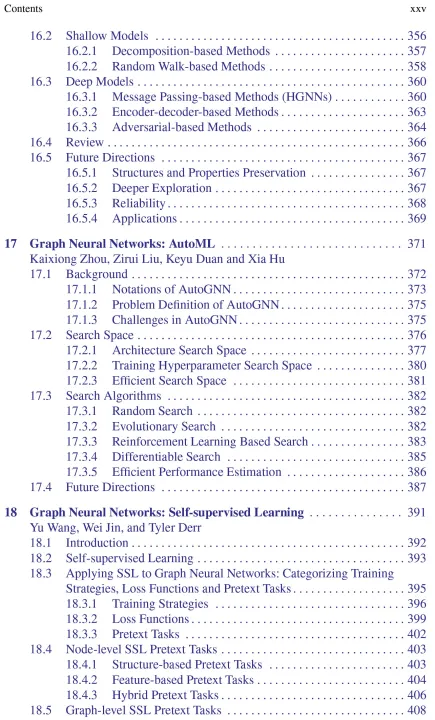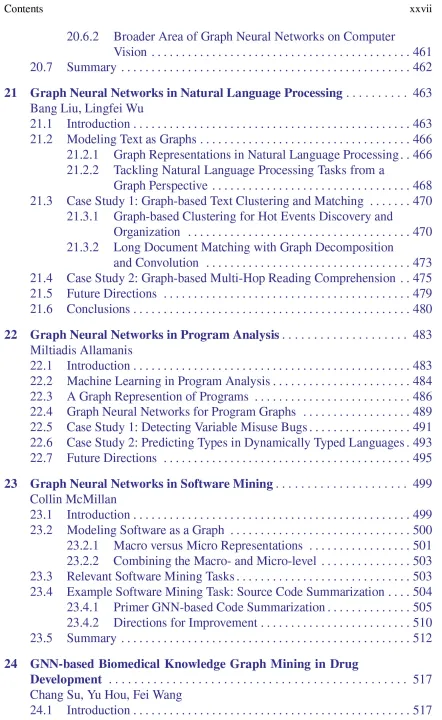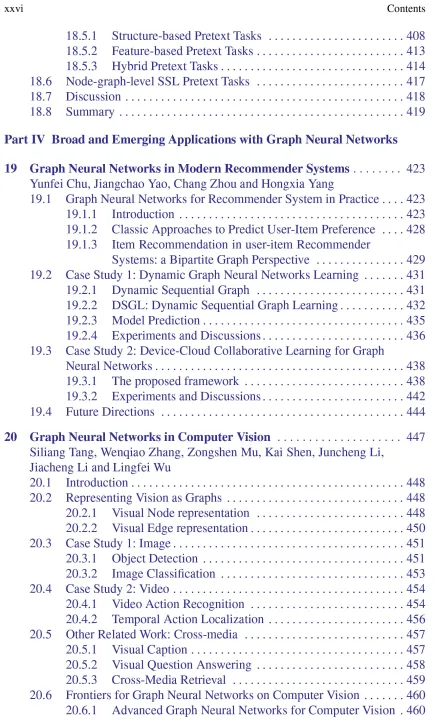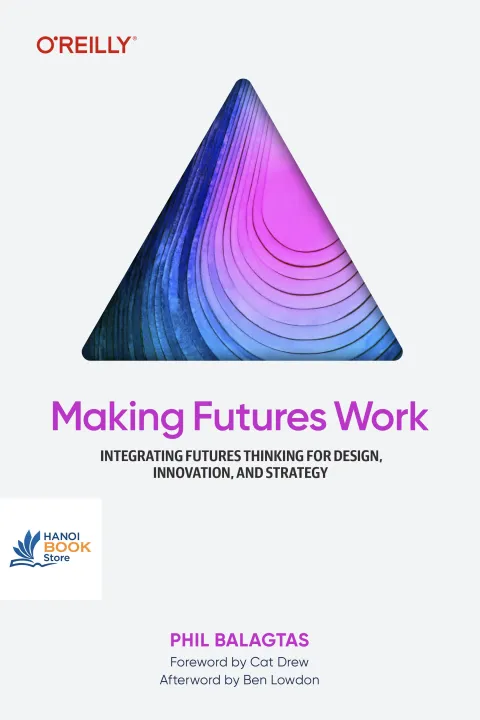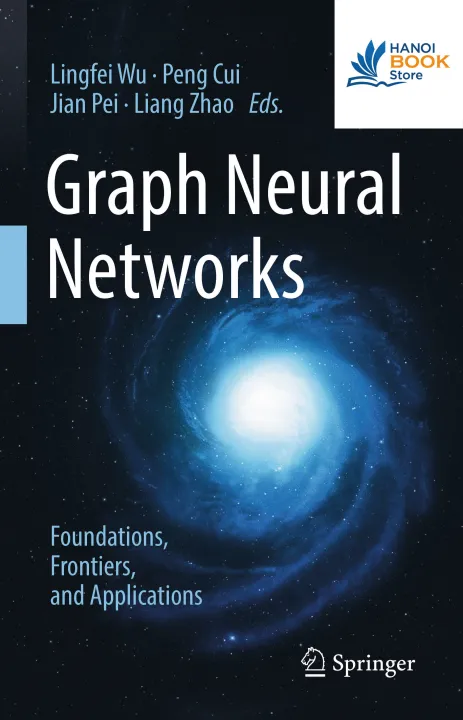
Graph Neural Networks Foundations, Frontiers, and Applications (sách keo gáy, bìa mềm)
Categories:Computers - Artificial Intelligence (AI)
Year:2022
Edition:First
Language:english
Pages:701
Deep Learning models are at the core of
artificial intelligence research today. It is well known that deep
learning techniques are disruptive for Euclidean data, such as images or
sequence data, and not immediately applicable to graph-structured data
such as text. This gap has driven a wave of research for deep learning
on graphs, including graph representation learning, graph generation,
and graph classification. The new neural network architectures on
graph-structured data (graph neural networks, GNNs in short) have
performed remarkably on these tasks, demonstrated by applications in
social networks, bioinformatics, and medical informatics. Despite these
successes, GNNs still face many challenges ranging from the
foundational methodologies to the theoretical understandings of the
power of the graph representation learning.
This book provides a
comprehensive introduction of GNNs. It first discusses the goals of
graph representation learning and then reviews the history, current
developments, and future directions of GNNs. The second part presents
and reviews fundamental methods and theories concerning GNNs while the
third part describes various frontiers that are built on the GNNs. The
book concludes with an overview of recent developments in a number of
applications using GNNs.
This book is suitable for a wide audience
including undergraduate and graduate students, postdoctoral
researchers, professors and lecturers, as well as industrial and
government practitioners who are new to this area or who already have
some basic background but want to learn more about advanced and
promising techniques and applications.